What can be more delightful than Juglar’s history of banking and economic crises with a nice piece of pastry (probably deserved after a long swim in the sea)? Besides, it helps us understand the current situation...
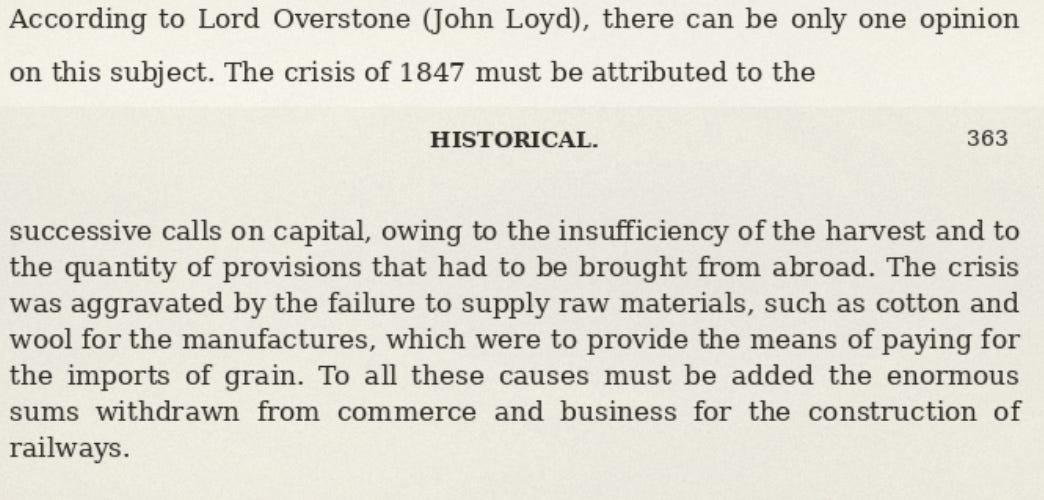
This first extract directly reflects what Dalio said about crises. He explains that they occur because people want to convert wealth into means of circulation.
https://www.bloomberg.com/news/videos/2026-06-03/dalio-ai-bubble-to-burst-as-wealth-converts-to-money-video
Dalio is echoing exactly what Thomas Tooke explained in the late 1820s, referring to what happened during the crisis of 1825.
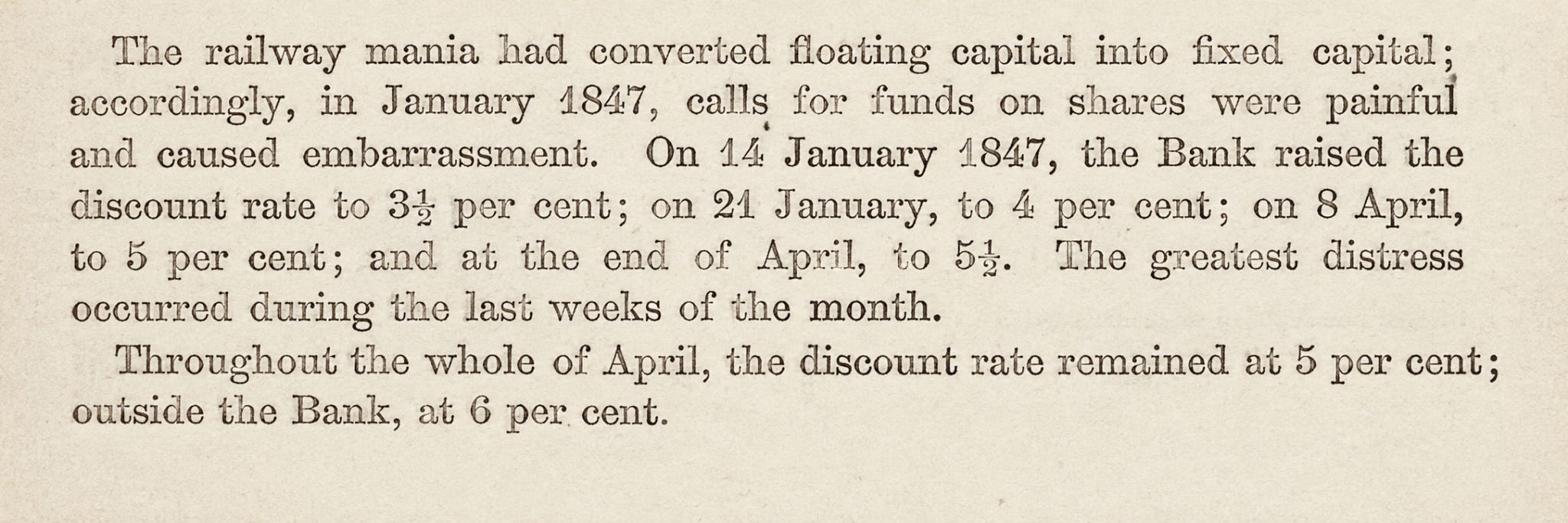
But first, there is the rush to convert money capital into “wealth,” or the conversion of money capital into hard “fixed capital.” And we have had plenty of that in AI.
This is what Juglar explains about the crisis of 1847.
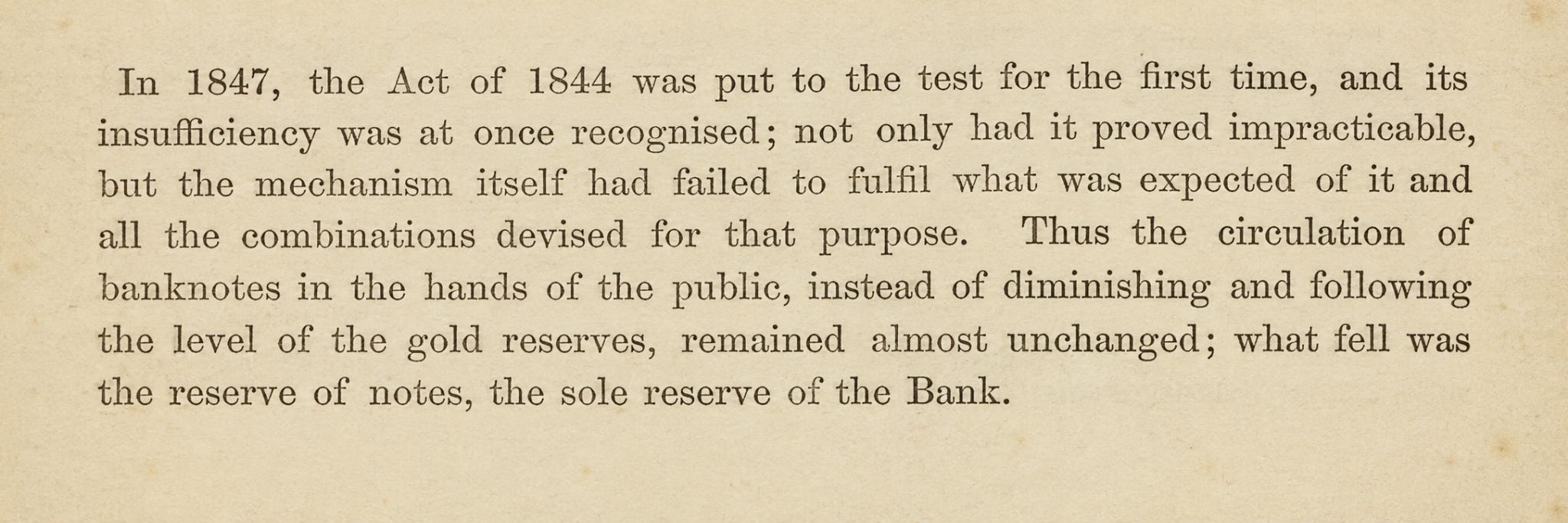
About the inane idea of regulating the quantity of means of circulation (BTC silliness), which was attempted in 1844 by Robert Peel and created a very severe economic situation.
In a sense, one could argue that bad monetary and fiscal policies have resulted in very bad economic outcomes. The UK was spared the bad consequences of the Napoleonic Wars because of the formidable force of Henry Thornton, who correctly advised the suspension of convertibility in 1793, criticised the excessively loose interest-rate regime of 1810, and adamantly pushed for the progressive return to convertibility, voted for in 1819 and implemented in 1821 in the UK.
But I digress. The 1825 crisis could arguably be blamed on a similar “coup de whisky” to what the Fed did prior to the 1929 crisis by monetising Exchequer bills, stimulating the economy too much, and then acting too late and too forcefully to curb the excesses. Sounds familiar?
Japan can relate, I am sure.
But the crisis of 1847 was a BTC-style “fixed money” delusion, which created massive havoc and some serious political and social upheavals as a result.
Lord Overstone explains how, in fact, the only remedy was to raise rates—not per se, but sufficiently to ensure that, instead of exporting gold, domestic prices would fall sufficiently for goods and services to be exported to settle the trade imbalance, rather than sending gold. In other words, interest rates alone do not affect the price of gold. But what about the interest-rate rule that people use to expect the price of gold to go down? I will come to that in a second.
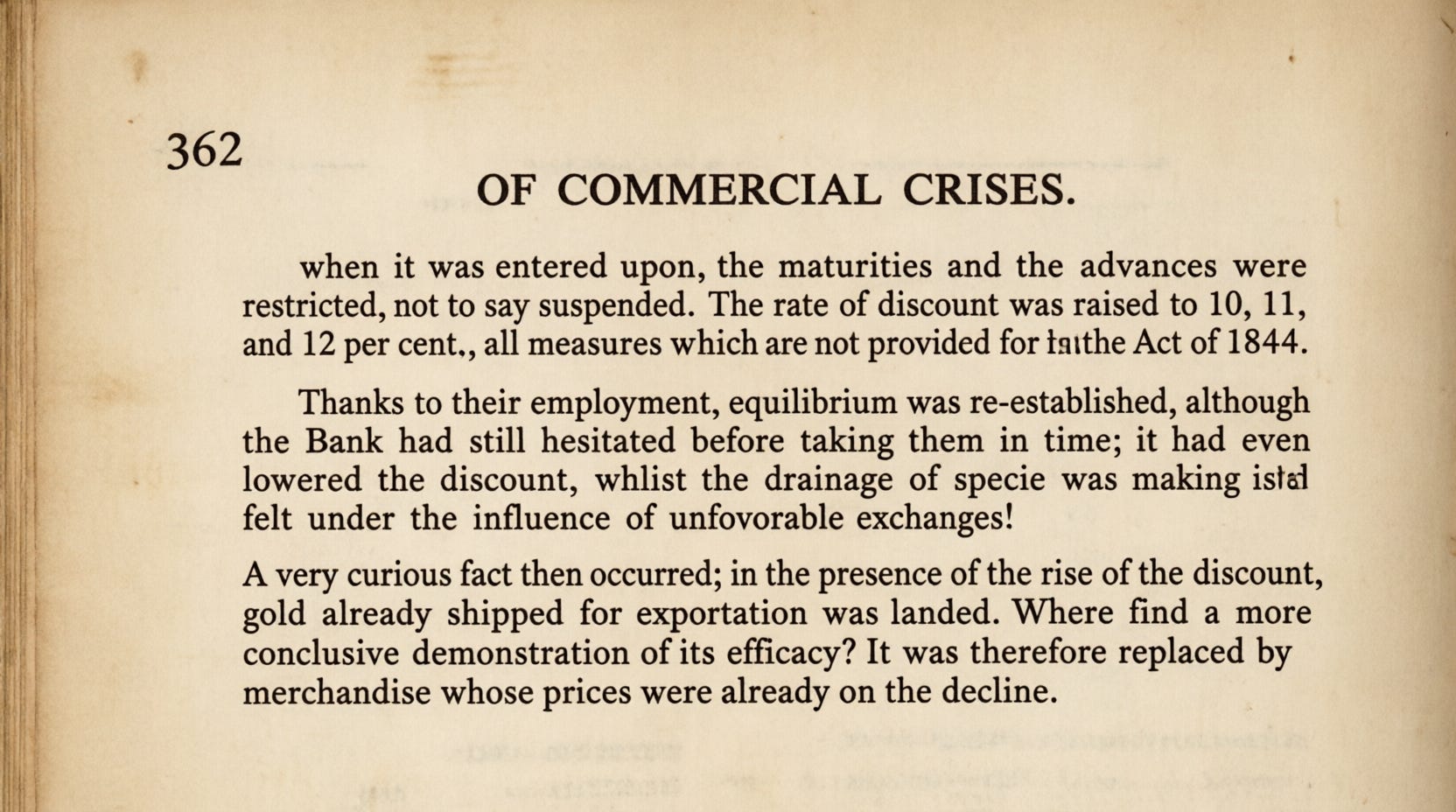
And the conclusion of the committee in the UK could not be clearer. Not only did the conclusion completely reject the fixed-money argument (BTC, take that!), but it also explained that interest rates were the mechanism—not per se, but as a means of pushing domestic prices down sufficiently for the terms of trade to become favourable, so that goods and services would be sent instead of gold.
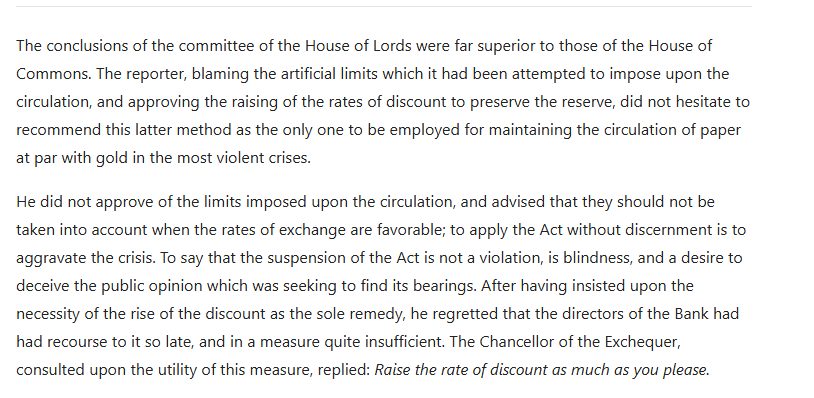
The two extracts above confirm two things:
With interest rates sufficiently high, the gold drain stops—not because rates are high, but because the effect of interest rates on domestic prices has been so intense that prices have plunged, and goods are now used to settle imports.
I guess now you understand why Mr. TRUMP wants to impose tariffs.
So, what about the rule of interest rates not working per se today, nor working per se back in the mid-19th century? What has changed, and what is similar?
The rule of interest rates works ONLY when trading partners agree to the Nixon–Kissinger paradigm.
It works ONLY when trading partners agree to recycle their surplus into USTs—in other words, when they AGREE to provide vendor financing. When they do not agree, it has a name: it is called a discharge (of debt), an external drain, or, in modern parlance, refusing to provide vendor financing.
And when they do not agree, instead of buying USTs (vendor financing) with the USD they acquired through trade, they SELL the USD they acquired and BUY gold with it. So now I guess you understand why “gold behaves abnormally against interest rates.” Gold behaves totally NORMALLY against US trade imbalances; it is just that forcing trading partners to recycle their surpluses, as has been done since the 1970s, IS the abnormal thing, and China is not having it.
(France did not have it in 1927 or in 1965, and it evidently led to a devaluation of the vendor-financing currencies.)
About Crowding Out
This little piece is interesting. It blames overtrading (excessive capital spending), combined with issues affecting the prices of some commodities. And finally, it points to the massive amount of capital that went into railroads, which put strains on the overall economy by crowding out other investment through higher interest rates.
You can see that in the performance of non-AI stocks and in consumer delinquencies, due to the combined effects of commodity prices on consumers’ budgets and higher borrowing costs for those same consumers.