
Unless you can find a straight of Hormuz to close every year, You are not going to see the current cicrumstances in China continue.
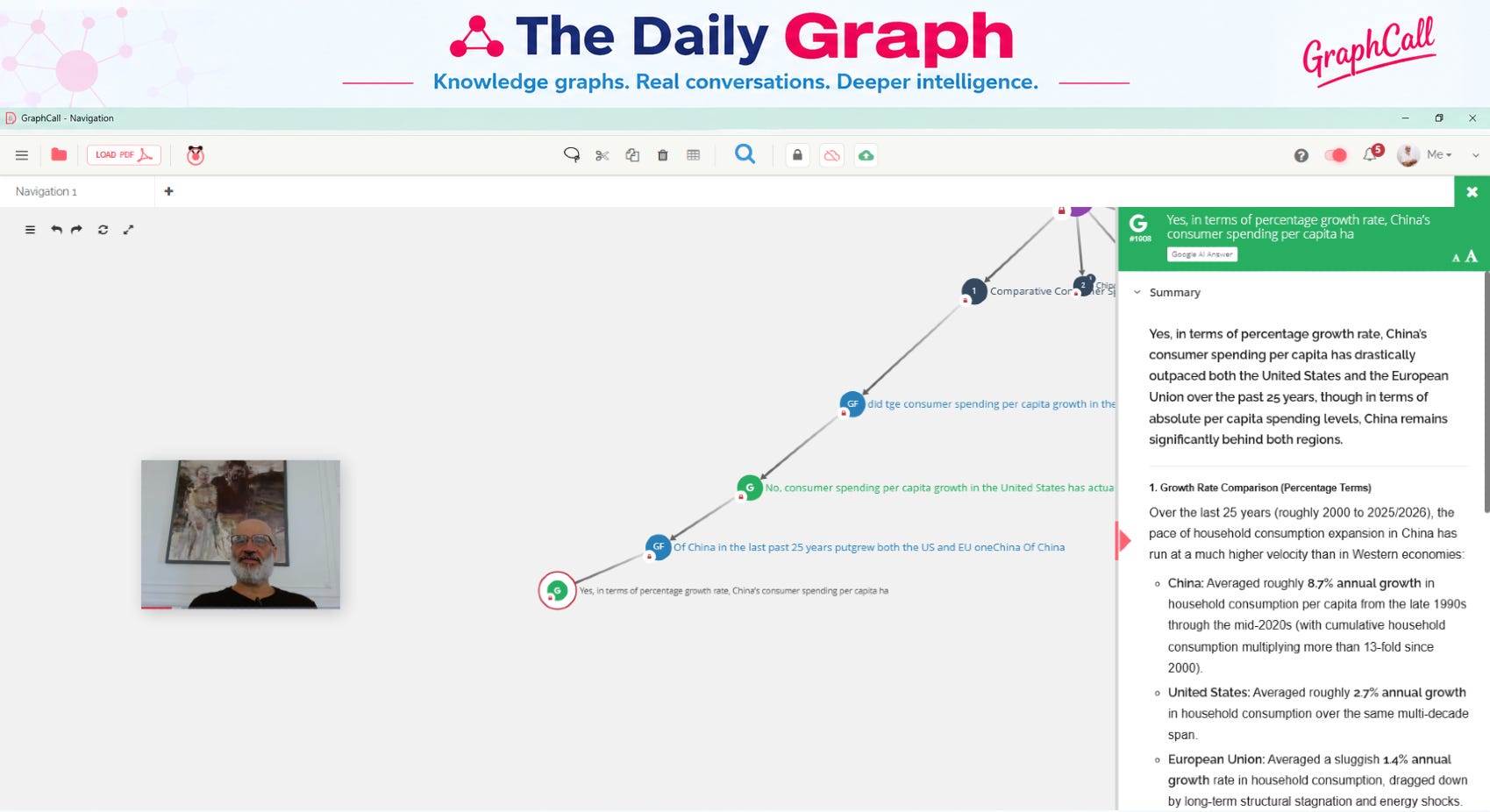
There is currently a triple-whammy impact of circumstances affecting the Chinese economy, which is masking structural changes.
In recent years, China has had a combination of a real estate bust, a micro-credit bust hangover, and prolonged COVID scars, which put many small companies out of business and damaged balance sheets. As a result, many have predicted that China is Japan.
But there are fundamental differences.
Japan was never allowed to convert its USD acquired through trade into Gold. And it’s not even because of “Gold”, it’s because of double entry accounting. It would be the same with any non-double entry asset, non-financial asset. In other words an asset which is not a liability at the same time. (All Commodities fit in this category. Gold is the fittest commodity for that role. That’s it).
And as explained by Rueff and others, is a transfer of wealth, NOT a duplication of purchasing power, which leaves the creditor country with a poor consumer wealth effect despite the trade surplus (Japan) because the creditor country is politically forced to do vendor financing endlessly.
But China is NOT doing vendor financing, and that has excellent long-term consequences for consumption in China, and the opposite in the US, with inflation, a weakening currency versus the country that is not recycling, and higher nominal rates.
Check Kenneth Rogoff; he knows, and he is not a newbie.
The other factor which did not exist for Japan is the substitution of Oil for EVs in ground transportation, for both personal vehicles and trucks. This means a lot less income from consumers sent abroad just to be able to move from point A to point B. That’s the X-I in the GDP equation.
Finally, there is the point made by Henry Thornton, which is that you can’t build your wealth by consuming it away; you have to save to form commercial capital. This notion has been forgotten, starting in 1922, with the political contraption of accepting FX as reserves, or vendor financing.
This contraption/fallacy has blown up twice: first, in 1927, when Rist from Banque de France did not accept GBP currency in trade settlement anymore, and then by Rueff, when, in the mid-1960s, the countries of Europe (principally) did not accept the USD in trade settlement anymore (no vendor financing).
The point made by Thornton is reflected in an economy where consumption as a percentage of GDP was structurally low AND, at the same time, where you find the highest consumption growth in the last 25 years in China. There is no paradox. If you save a lot to build capital, machinery, etc., you end up with a lot more commercial capital and a lot more goods, which during the fastest period of growth of the US were falling in price while wages were not really.
All statistics point to wages rising much faster than prices in China in the last 15 years, and quite the opposite in many countries in the West. And if you believe Wall Street and LBO firms inflation is such a good thing. But coming back to China, this reality of massive consumption growth in China can not be debated. Why? It’s data. And that’s why consumption stocks are at such an interesting juncture in China.
Once again the myopic analyst will take a spike in energy prices which evidently impacts consumption budgets as a “proof” that a structural problem is at play. Classical economists could serve well as “economic ophthalmologists”. But unless you can find straits of Hormuz to close every year or so, you can recreate the income shock. Besides this shock, while not easily reproducible, is followed by accelerated but continuous substitution of fossil fuels by EVs.
Nathan Rothschild famously said:
“Fortunes are made by buying low and selling too soon.”
As per the framing of the credit cycle, Juglar was according to Schumpeter the greatest.
Credit cycles follow one after another:
Crisis => bank panic => bank run (short period)
(Wealth management product bust / real estate bust, micro-lending bust in China)
You have risk in interbank lending, and the money markets have to be ring-fenced. That’s what happened with Evergrande in China recently / Lehman in 2008.
Then comes a period of liquidation / despondency / lack of animal spirits, with money going into cash balances. Interest rates are low; equity yields are very high in comparison to cash yields. Nobody wants “risks” precisely when it’s the least risky . Least risky = high equity yields.
(China today or the US in Jan–Feb 2011)
Then slowly, a new credit cycle starts: cash leaves the bank and enters the economy; velocity and credit appetite rise…
… (Thomas Tooke has a fantastic explanation for the cycle in his 1826 book.)
At the end of the cycle, leverage is everywhere; prudence has been thrown out of the window. The wildcat banks (Private Credit) have lent to excess.
The turn is when people want to convert their invested assets back into monied capital. This is explained by Thomas Tooke, Lord Overstone, Ray Dalio, and Juglar.
The redemption from the wildcat banks of the day is here, the credit spreads are here, the overheating in credit is here in the US, and the inversion of debt yields versus equity yields (opposite to 2011) is here too.
At the end of the cycle everyone wants yields on stock precisely when there are not that attractive versus cash yields (Dalio reflected on that recently as well).